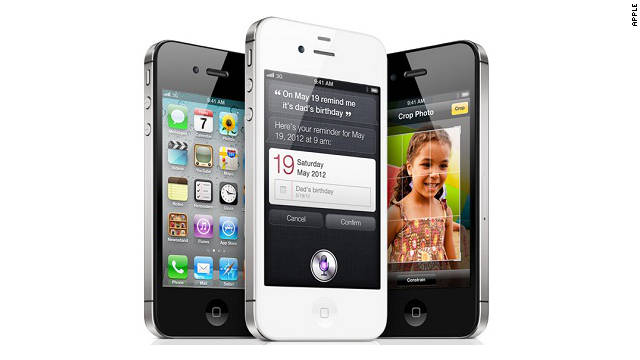
The 5 biggest iPhone 4S Bad

Nobody's perfect. And despite generally strong reviews and record early sales, the iPhone 4S is no exception.

Android 5.0 Lime Pie: 10 things we want to see

Summary:Rumours of a new Nexus handset are tricking in now, as we reported on 1 October 2012. There's been speculation that this phone will be sporting Key Lime Pie, but sources who spoke to AndroidAndMe claim it'll be running Android Jelly Bean.

Low-Cost Tablet Runs on Three Watts of Power

After a year of testing in a remote village in India, researchers are ready to scale up production of an ultra-low-power $35 tablet called the I-slate.

HTML Colour Codes and Names

HTML color codes are hexadecimal triplets representing the colors red, green, and blue. For example, in the the color red, the color code is FF0000, which is '255' red, '0' green, and '0' blue.

GM Ditches the Gas Tank in Its New Electric Car

General Motors plans to sell an electric version of the Spark, a mini-car that it currently sells outside the United States. GM will sell the gasoline version of the Spark in the U.S. starting next year, and will follow with the electric version in select U.S. markets and around the world in 2013.

Suicide Silence Profile

is an American extreme metal band from Riverside, California. The group consists of vocalist Mitch Lucker, guitarists Chris Garza and Mark Heylmun, drummer Alex Lopez and bassist Dan Kenny.

Friday, October 21, 2011

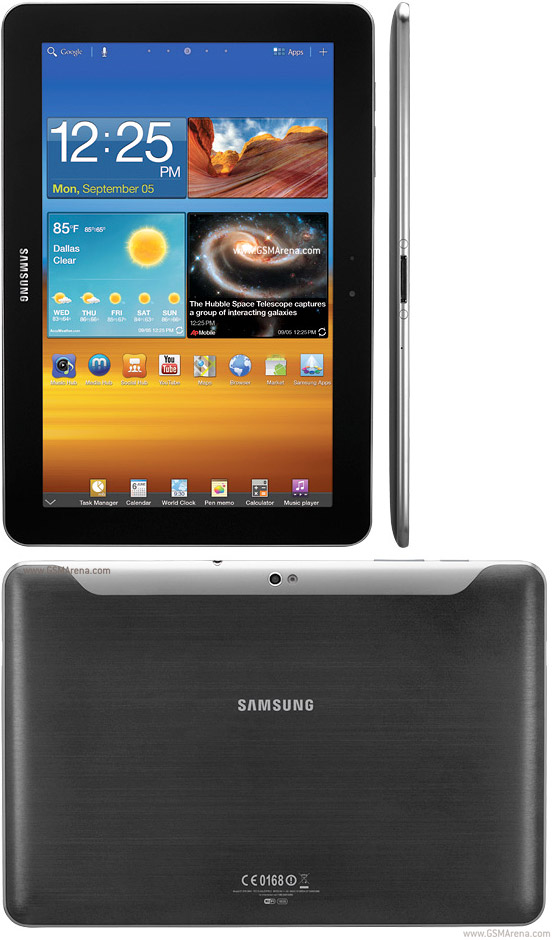
Samsung Galaxy Tab™ 8.9

Samsung Galaxy Tab™ 8.9

Samsung Galaxy Tab™ 8.9

This tablet is an expression of you – not its maker. 
If you buy the wrong tablet, you’re at the mercy of the manufacturer regarding how much you can customize or personalize your screens. But the beauty of Android is that you have much greater flexibility to arrange things however you want. You’ll have multiple home screens to compose and design, plus live wallpapers to express your mood and personality. The Tab also offers you the freedom of TouchWiz®, the intuitive user interface that allows you to quickly drag and drop your icons, widgets and Live Panels with only the touch of a finger. Now, reorganizing your tablet’s menus and navigational options will be simple and straightforward.


A screen so lifelike you’ll want to touch it. 
The Tab’s WXGA-TFT touchscreen redefines high resolution. Every image has amazing color, radiance, and clarity to capture all the detail of real life. The Tab’s dimensions give it an aspect ratio that lets you see more of the original image, without cropping or black bars. Now when you watch a movie with $100 million in special effects, you get the full impact. When you read eBooks or emails, every letter of text is razor sharp. Video chatting is more like talking face-to-face. And when your finger touches the responsive screen, every function is smooth as silk.

Performs at a higher level. So you can, too. 
Surf the internet just like on a PC, and get the full enjoyment of Adobe® Flash® Player compatible sites, games, and videos.
many and many more...
The Dual core 1GHz processor runs every function and app effortlessly. A full gig of ram gives you plenty of memory. The Tab’s Android ™ 3.1, Honeycomb platform is the proven gold standard to perform the full range of Google services like optimized Gmail™ and Google Maps™.

Does several things at once. Sound familiar? 
Multi-tasking is the new normal. None of us have time to do only one thing at a time. The Tab keeps you up-to-the-second with widgets and live panels that update constantly.
MultiTasking
And you can have more than one window open at a time to bounce around on. Access the Android Market™ for thousands of apps that keep your life moving with the speed you need. Sometimes your Tab is for work, sometimes it’s for play, and sometimes it’s hard to tell the difference.

Take gaming to the next level. 
The Tab 8.9 is gaming heaven. It has the speed and processing power to run any Android or Adobe® Flash® Player compatible game with no buffering, stalling, downloads, or plug-ins. And the screen shows every dragon’s scale, every gold doubloon, and every sword glint with eye-popping, heart-pounding detail.
You can’t be too thin.
Let's Play!

It’s only .34" from front to back, which is about as thin as a typical ballpoint pen. The Tab also weighs just 447 grams – so light that you’ll hardly notice it in your briefcase or purse. The body is sleek yet easy to grip, and fits comfortably in your hand. It’s the perfect portable device to take anywhere and connect through any Wi-Fi hotspot without monthly service fees or carrier contracts.

Your Tab is the hub of your social universe. 
For social networking, the Tab offers Social Hub, the pre-loaded app which organizes all your favorite sites in one, easy-to-access location.

Watch movies and TV shows anytime and everywhere. 
The Samsung Galaxy Tab 8.9 gives you access to Media Hub, where movies and TV shows can be rented or downloaded for purchase. When you choose to purchase, your content can be stored in the cloud and viewed on up to five other Media Hub enabled devices, or even watched on your television through Smart Show with an HDMI video-out adapter (sold separately).
Watching Everywhere...

You can watch it now, or later for offline viewing. The list of content available is refreshed daily to include the latest episodes of last night’s TV shows. When you choose to watch something, you can begin watching within minutes with progressive download.

Want more places to get movies? Not a problem.
The Google Videos app is preloaded, letting you rent thousands of movies starting at $1.99. Get Amazon Instant movies with Unlimited Streaming videos offering more than 2,000 movies and 500 TV shows. If you’re an Amazon Prime user, you get movies absolutely free with membership. Many movies and videos are Adobe® Flash® Player compatible, and you’ll be able to watch them all. Most networks offer free shows on their own websites, and you’ll be able to access the free content with a browser based website for TV shows. Want more options? Get the IMDB app from Android Market to watch movie trailers, or the Vevo App for premium music videos.

It’s like a bookworm’s heaven. 
The Amazon Kindle app is preloaded, giving you access to the largest selection of the books (including New York best sellers) and periodicals people want to read. You even get free sample books, chapters and popular classics.
BookWorm? See this!

Google Books comes preloaded, offering you free out-of-trademark books such as “The Adventures of Tom Sawyer,” “Alice in Wonderland,” “Pride & Prejudice” and many more. You can purchase thousands of books via Android Market.

Sync and Share Digital Content with AllShare™ 
Transform your digital living experience by enjoying your content on multiple screens, anytime, anywhere. You can wirelessly stream your movies, music and photos from your smartphone, or tablet to your Smart TV, PC and to other DLNA Certified® devices. Samsung AllShare™ seamlessly puts your music, memories and videos in harmony.


Screen images simulated. Appearance of device may vary. Android, Gmail, Google Books, Google Videos, Google Maps and Android Market are trademarks of Google, Inc. Adobe and Flash are either registered trademarks or trademarks of Adobe Systems Incorporated in the United States and/or other countries. Other company and product names mentioned herein may be trademarks of their respective owners.

Full Spec...

Tablet with support for GSM voice communication, SMS, and MMS.General 2G Network GSM 850 / 900 / 1800 / 1900
3G Network HSDPA 850 / 900 / 1900 / 2100
Announced 2011, March
Status Available. Released 2011, October
Size Dimensions 230.9 x 157.8 x 8.6 mm
Weight 453 g
Display Type PLS TFT capacitive touchscreen, 16M colors
Size 800 x 1280 pixels, 8.9 inches (~170 ppi pixel density)
- Multi-touch input method
- Accelerometer sensor for UI auto-rotate
- TouchWiz UX UI
- Three-axis gyro sensor
- Touch-sensitive controls
Sound Alert types MP3 ringtones
Loudspeaker Yes, with stereo speakers
3.5mm jack Yes
Memory Phonebook Practically unlimited entries and fields, Photocall
Call records Yes
Internal 16/32/64 GB storage, 1GB RAM
Card slot No
Data GPRS Yes
EDGE Yes
3G HSDPA, 21 Mbps; HSUPA
WLAN Wi-Fi 802.11 a/b/g/n, Wi-Fi hotspot
Bluetooth Yes, v3.0 with A2DP
Infrared port No
USB Yes, v2.0
Camera Primary 3.15 MP, 2048x1536 pixels, autofocus, LED flash
Video Yes, 720p
Secondary Yes, 2 MP
Features OS Android OS, v3.0 (Honeycomb)
CPU Dual-core 1GHz ARM Cortex-A9 processor, ULP GeForce GPU, Tegra 2 T20 chipset
Messaging SMS(threaded view), MMS, Email, Push Email, IM
Browser HTML
Radio No
Games Yes
Colors Black
GPS Yes, with A-GPS support
Java Yes, via Java MIDP emulator
- SNS integration
- Digital compass
- TV-out
- MP4/DivX/Xvid/H.264/H.263 player
- MP3/WAV/eAAC+/OGG player
- Organizer
- Image/video editor
- Quickoffice HD editor/viewer
- Google Search, Maps, Gmail,
YouTube, Calendar, Google Talk, Picasa integration
- Adobe Flash 10.2 support
- Voice memo
- Predictive text input (Swype)
Battery Standard battery, Li-Po 6000 mAh

Suicide Silence Profile

Suicide Silence
is an American extreme metal band from Riverside, California. The group consists of vocalist Mitch Lucker, guitarists Chris Garza and Mark Heylmun, drummer Alex Lopez and bassist Dan Kenny. Formed in 2002, the band has released three full-length studio albums, one EP and seven music videos. The group has been met with a great amount of praise and favorable reviews while even during 2009, Suicide Silence was awarded with the Revolver Golden God award for "Best New Talent".

Suicide Silence
History
Formation, debut EP and The Cleansing (2002–2008)
Suicide Silence were founded in 2002 in Riverside, California and were at that time, a side-project of many of the members of other groups. The band performed their first show at a local area within Riverside and at that time, the line-up consisted of the members Chris Garza and Rick Ash as guitarists, Mike Bodkins as bassist, Josh Goddard as drummer and two vocalists, Mitch Lucker and Tanner Womack. Shortly after their first performance, Womack was fired from the band and they released their first demo the following year.[1] They released their second demo in 2004. By the proceeding year, the members took the band more seriously and were no-longer deemed as a side project, they would then advance to record their third and final demo in 2006 after the band recorded and released their first public studio quality material entitled, Suicide Silence EP which was released through Third Degree Records and later re-released in the UK through the English label In at the Deep End Records.[2] Drummer, Josh Goddard departed from the band in 2006 and was replaced by Alex Lopez who was the former guitarist for the bands Blacheart Eulogy and The Funeral Pyre before his joining.

Two years later, the band signed to Century Media and released their debut full-length album The Cleansing.[3] The album was mixed by Tue Madsen, produced by John Travis and features artwork by Dave McKean.[4][5] It debuted at number 94 on the Billboard 200,[6] selling 7,250 copies in its first week of release.[7] The sales of that week ending combined with its later sales made The Cleansing one of the best-selling debut albums in Century Media history.[8] With the success of their debut album, Suicide Silence were included to take part in Mayhem Festival that took place during the summer of 2008. Afterward, they toured Europe with Parkway Drive and Bury Your Dead, following a successful US tour with the same bands. Suicide Silence then followed along with a tour in Australia with Parkway Drive, A Day to Remember and The Acacia Strain in mid-2008 during the time when they were included to perform at Sweat Fest. At this point Suicide Silence were beginning to gain a wide range of fans throughout the world. While returning back home from the continuous tours, the band covered the song "Engine No. 9" by Deftones and released the cover on their limited edition "Green Monster" single as well as iTunes all during the same year.[9]


No Time to Bleed (2008–2010)
Revolver described the band's live performances as "explosive and relentless".[1]

No Time To Bleed

Shortly before embarking on Mayhem Festival in summer 2008, Suicide Silence's MySpace profile title read "Suicide Silence (Is writing a new album)", which was the first indication of ensuring the upcoming of their second album. On June 26, 2008, Mitch Lucker appeared on the Headbangers Ball blog podcast. In the interview, Lucker stated that the album would be recorded through tracks as opposed of being recorded live, such as The Cleansing. He also said the new album would "blow The Cleansing away." Machine was chosen by the band to be the producer of the album. The title for it was revealed as being No Time to Bleed.[10]

Suicide Silence began recording No Time to Bleed in February with production by acclaimed producer Machine and engineering by Will Putney.[11] During Music as a Weapon as well as the band's Cleansing the Nation tour, they began to perform the songs "No Time to Bleed", "Your Creations", "Lifted" and "Wake Up" months before the release of the album. In April they received the Revolver Golden God award for "Most Innovative Band" and performed at the awards show.[12] Suicide Silence were included on 2009's Pedal to the Metal tour, along with the bands Mudvayne, Static-X, Bury Your Dead, Dope and Black Label Society.[13] During the same year, the group was awarded the Golden God award for "Best New Talent".[14]

Suicide Silence released No Time to Bleed on June 30, 2009 through Century Media. The album peaked at #32 on the Billboard 200,[15] selling 14,000 copies in the first week in the United States alone.[16] The opening track from the album, "Wake Up" was released as a digital download-only EP which includes the original song, a live performance of it and a remix handled by Shawn Crahan of Slipknot. A music video was produced for the song as well and made its debut premiere on Fearnet.[17][18] "Genocide" was released as the album's second single. Its music video was created in collaboration with Bloody Disgusting and a remix for the song was featured in the Saw VI soundtrack.[19][20] Suicide Silence announced production for a music video for the song, "Disengage", of which was released as a single on April 20, 2010.[21] The video for it was released during June 2010.[22] The band played throughout the entire Warped Tour 2010[23] on the Altec Lansing Stage.[24] In October, the group began their first headlining tour in two years[25] with support from MyChildren MyBride, Molotov Solution, The Tony Danza Tapdance Extravaganza and Conducting from the Grave.[26]

The Black Crown (2011—present)
By 2011, Suicide Silence began preparing their third full-length album in Big Bear, California with Steve Evetts as the selected producer.

The Black Crown

During March, the group performed at California's Metalfest, and a week later, Nevada's Extreme Thing festivals,[29] at both of these performances, the band confirmed that the new album would be titled The Black Crown.[30] Working titles for the album were "Cancerous Skies", "Human Violence" and "Fuck Everything".[31] When asked by Kerrang!, Lucker revealed that the album's lyrical themes would feature more of the personal topics that No Time to Bleed had in-concept rather than the anti-religious theme that The Cleansing held. Lucker explained "I still have the same beliefs and same views, but I'm more open to everything. At this point in my life, I don't see the good in making people hate you for something you say. This record [The Black Crown] is for everybody."[30] The song "Human Violence" premiered on radio station Liquid Metal on May 13, 2011.[32] The Black Crown was released on July 12, 2011 and sold over 14,400 copies in the United States alone during its first week of release, which had it debuting at position number 28 on the Billboard 200 chart.[7][33]

The group was included on the line-up for the fourth annual Mayhem Festival, again playing on the Extreme Stage with other metal acts including Machine Head, Trivium and All Shall Perish during July and August 2011.[34]

Styles and influences
Suicide Silence perform an extreme metal musical style known as deathcore,[35][36][37] which is a fusion between death metal and metalcore.[38][39] The band perform this style as well as gain influences from several other extreme musical genres such as black metal, grindcore, and mathcore.[40] The mathcore elements can be seen in the varied speed changes and complex time signatures in the band's music. The vocals of Mitch Lucker are frequently fluctuating between death growls and high-pitched screamed vocals used in black metal.[40] The drumming is very fast-paced, grindcore influenced, and employs a liberal use of double bass drumming and blast beats.[41]

The band members
The band members themselves have stated that they are influenced from groups such as Meshuggah, Sepultura, Cannibal Corpse, Suffocation, Necrophagist, Nile, Slipknot, Deftones and Korn.[42][43][44]
Band membersCurrent

Christopher Garza – rhythm guitar (since 2002)
Mitch Lucker – lead vocals (since 2002)
Mark Heylmun – lead guitar (since 2006)
Alex Lopez – drums (since 2006)
Daniel Kenny – bass guitar (since 2008) Former
Mike Bodkins – bass guitar, backing vocals (2002–2008)
Rick Ash – lead guitar (2002–2006)
Josh Goddard – drums (2002–2006)
Tanner Womack – co-lead vocals (2002)

Adam Young Profile

Adam Young Profile


Adam Young (born July 5, 1986) is an American musician, multi-instrumentalist, producer, song writer, vocalist and the founder of the electronic project Owl City. He has also fronted numerous other musical projects, including Sky Sailing[1] and Port Blue.


Adam Young


Personal life
Young has referred to himself as being deeply shy and socially introverted. He told Christianity Today journalist Mark Moring that "telephone conversations still terrify me", and Moring was only allowed e-mail communication for an interview.[2] Young resides in his hometown, Owatonna, Minnesota, where he writes and programs all his music. Adam Young enjoys photography as a hobby and says he is an amateur photographer.

Young identifies himself as a Christian, and writes about his faith on his blog and through his music.[3]

Young has also stated that he has Asperger's Syndrome, a high-functioning form of autism.[4]


All Music Projects
  • Owl City
  • Sky Sailing
  • Port Blue
  • Insect Airport
  • Windsor Airlift
  • Blue Dallas
  • The Grizzly
  • Aquarium

  • Novel

  • Swimming With Dolphins

  • Dolphin Park

  • Chester McWiggins and the Kowboy Kidz
  • Seagull Orchestra
  • Keehar
  • Nuclear Suplex
  • Basketball


Owl City

OWL CITY  ('\m/')


Career beginnings
Young originally began creating music in his parents' basement while suffering from insomnia. Working alone, Young posted his fizzy electro-pop songs to MySpace and iTunes, selling about 2,000 tracks a week[5] under the name Owl City. Young quickly developed a MySpace following and self-released an EP and a full-length album. His debut release Of June was released in 2007 and despite Owl City not being signed to a record label, still managed to reach #15 on the US Dance/Electronic Albums chart. His first album Maybe I'm Dreaming was released in 2008, and reached #13 on the US Electronic Albums chart, also without the support of a record label. In 2009, Young signed a deal with the record company Universal Republic and released his second full-length album Ocean Eyes and re-released his two previous works.

Of June
Of June is Owl City's first musical release. Adam Young self-released it on April 21, 2007 and then later again through Universal Republic. It has seven tracks, one of which has been re-released in Ocean Eyes. Hello Seattle was re-released with the album Ocean Eyes but now has a 2007 version, a remix, and the 'original'.

Maybe I'm Dreaming
Adam Young's first full-length album. Despite Owl City not being signed to a record label, Maybe I'm Dreaming reached #13 on the Dance/Electronic Albums chart. This album earned Adam Young a substantial fanbase which resulted in him touring throughout the United States with band members Austin Tofte, the frontman of Swimming With Dolphins on keys and backing vocals, Matthew Decker on drums and occasionally Breanne Düren also on keys and backing vocals.

Ocean Eyes
Ocean Eyes

Under Universal Republic, Young released the album Ocean Eyes. His hit single "Fireflies" sold 650,000 copies in its first week and was the iTunes Single Of The Week. It later went on to reach number one on the Billboard Hot 100. Ocean Eyes reached the top ten in the US album charts and topped the US rock and electronic charts. In February 2010, iTunes released their list of highest-selling songs since 2003 with "Fireflies" listed at #24.[6] After the success of Ocean Eyes, Young began touring internationally. The touring band now consists of Adam Young (lead vocals, guitar, keys, drums), Breanne Düren (backup vocals/keyboard), Matthew Decker (drums), Laura Musten (violin), and Hannah Schroeder (cello). A deluxe version of Ocean Eyes was released on Jan. 26 2010. It contains a bonus track, Rugs From Me To You.


All Things Bright and Beautiful

All Things Bright and Beautiful

Owl City released his "sophomore" album, All Things Bright and Beautiful, on June 14, 2011. The album reached #1 on the iTunes Top 10 Electronic Albums in both the US and Canada and received 4 1/2 stars from customers. The albums includes three singles, Deer in the Headlights, Alligator Sky, and Galaxies. The album has one bonus track How I Became the Sea,[7] and a track only available in Japan and the UK, Shy Violet.

Sky Sailing
On June 29, 2010, Young announced that he would be releasing his early recordings under the name Sky Sailing. Sky Sailing's debut album, An Airplane Carried Me to Bed, was made available exclusively through iTunes on July 13, 2010.[8]

Port Blue
Port Blue is an alias used for melody driven instrumental, ambient productions. Through this moniker Adam Young has released one album, The Airship (2007) and one EP, The Albatross EP (2008).
'Port Blue' is music that can be heard playing in elevators, hotel lobbies, airports, museums and restaurants inside my head. It is the soundtrack to my dreams. If I wrote music for movies, this is what my film scores would sound like. Much of the aesthetic of Port Blue is not what lies in the recordings but rather what is extracted from them...Dreamscapes. No vocals.
In my opinion, there is a huge lack of imaginative, unconventional music being created by artists today and what little there is, goes widely unappreciated by the masses. 'Port Blue' is my attempt at re-creating the music I want to hear and the emotions I want to feel.
I hope you enjoy my art as much as I enjoyed creating it. If by chance you ever feel as though you’ve come to know these songs, please consider yourself a friend because in a manner of speaking, you know me. This music is my heart and soul. This is who I am.
(Adam R. Young, 2006)
On June 1, 2011, Adam announced via Twitter that he was working on a new Port Blue song.[9]

Collaborations
He has provided vocals for different artists/producers and their projects, including:
Chicane - Middledistancerunner (2010)
Armin Van Buuren - Youtopia (2010)
He Is We - All About Us (2011)
TobyMac - The First Noel (2011)

He has also produced music for other artists including:
Relient K - Terminals (2009)
Shamar - I Don't Know Why (2010)

References
^ "Skysailing Music". Sky Harbor Entertainment. 2011-02-15. Retrieved 2011-02-15.
^ Q & A: Owl City | Music. Christianity Today (2011-06-14). Retrieved on 2011-09-15.
^ Owl City Blog. Owl City Blog. Retrieved on 2011-09-15.
^ [1] Retrieved on 2011-10-05
^ Sisario, Ben (2009-11-20). "From Mom’s Basement to the Top of the Chart". The New York Times. Retrieved 2011-02-15.
^ "Factbox: Most-downloaded iTunes songs". TVNZ. 2010-02-26. Retrieved 2011-02-15.
^ James Montgomery (2011-05-09). "Owl City Moves Out Of The Basement On All Things Bright And Beautiful". MTV. Retrieved 2011-05-11.
^ "Sky Sailing offers free track download". Sky Harbor Entertainment. 2010-06-29. Retrieved 2011-02-15.
^ Working on a new Port Blue song.. Twitter


Thursday, October 20, 2011

What is Music?!

What is Music?! 
Read this...


A painting on an Ancient Greek vase depicts a music lesson (c. 510 BC).
 

Music is an art form whose medium is sound and silence. Common elements of music are pitch (which governs melody and harmony), rhythm (and its associated concepts tempo, meter, and articulation), dynamics, and the sonic qualities of timbre and texture. The word derives from Greek μουσική (mousike; "art of the Muses").[1]
The creation, performance, significance, and even the definition of music vary according to culture and social context. Music ranges from strictly organized compositions (and their recreation in performance), through improvisational music to aleatoric forms. Music can be divided into genres and subgenres, although the dividing lines and relationships between music genres are often subtle, sometimes open to individual interpretation, and occasionally controversial. Within "the arts", music may be classified as a performing art, a fine art, and auditory art. There is also a strong connection between music and mathematics.
To many people in many cultures, music is an important part of their way of life. Greek philosophers and ancient Indian philosophers defined music as tones ordered horizontally as melodies and vertically as harmonies. Common sayings such as "the harmony of the spheres" and "it is music to my ears" point to the notion that music is often ordered and pleasant to listen to. However, 20th-century composer John Cage thought that any sound can be music, saying, for example, "There is no noise, only sound."[2] Musicologist Jean-Jacques Nattiez summarizes the relativist, post-modern viewpoint: "The border between music and noise is always culturally defined—which implies that, even within a single society, this border does not always pass through the same place; in short, there is rarely a consensus ... By all accounts there is no single and intercultural universal concept defining what music might be." (to be continued)

A Social-Media Decoder


A Social-Media Decoder

New technology deciphers— and empowers—the millions who talk back to their televisions through the Web.


 Deb Roy

From his 24th-floor corner office in midtown Manhattan, the veteran CBS research chief David Poltrack can gaze southward down the Avenue of the Americas, its sidewalks teeming. For more than four decades, it has been his job to measure people's television habits, preferences, and reactions. In large part, this has meant following the viewing habits of Nielsen panels of TV viewers and parsing the results of network surveys on their opinions. On a late September afternoon, with fall premieres under way, his desk was strewn with color-coded opinions from 3,000 Americans who had wandered into CBS's Las Vegas research outpost, Television City, at the MGM Grand Hotel and Casino, and agreed to fill out TV surveys for the chance to win a 3-D home entertainment system.

Power shift: Deb Roy, CEO of Bluefin Labs, says social media have changed the relationship between media consumers and producers. Credit: Ian Allen


But now he's also dealing with a growing force: the masses talking back through social media. Of the approximately 300 million public comments made online worldwide every day—about two-thirds of them on Twitter—some 10 million, on average, are related to television (though daily numbers vary quite widely). "¿Que sera two and a half men si[n] Charlie?" one viewer recently tweeted, alluding to the replacement of Charlie Sheen by Ashton Kutcher on the CBS sitcom. "The beginning of Person Of Interest is like Jack&Ben all over again," remarked another. (A couple of weeks later, another added: "I assume CBS will keep going with what's been working for them, and replace Andy Rooney with Ashton Kutcher.") TV executives like Poltrack must now grapple with these spontaneous, messy, irreverent remarks.
How to make sense of it all? Poltrack walked into the office of a staff member, John Butler, clutching a report from a startup called Bluefin Labs, a social-media analytics firm that attempts to track comments on shows and ads and discern the commenters' interests and demographics. Some of what it had found seemed surprising. For example, the season premiere of Two and a Half Men had attracted 78,347 comments compared with 82,980 forDancing with the Stars, on ABC, even though the latter show has lower Nielsen ratings and an older audience that's less likely to participate in social media. (It turns out that reality competition shows, by their nature, attract more active audience response.) Poltrack wondered how a little-watched show called Bad Girls Club—on the Oxygen network—had garnered 32,665 comments. "Get Bad Girls Club up there," he said to Butler, motioning to Butler's computer screen. "What are they saying?" Butler scrolled through the raw comment string. "This bitch angie on #Badgirlsclub wear the same damn socks in every episode,"remarked one viewer; "BGC, shower & bed," announced another. It was hard to know what any of it meant.
Overall, the data was raw and, in many cases, ambiguous. But Poltrack came away with some respect for what he was seeing. "As a one-time measurement, we have better ones," he said, referring to CBS's precisely constructed surveys. But whereas the surveys are intermittent, social-media analytics can provide "a continuous monitor of conversation about a program, episode by episode," he said. "And that is something we can't replicate." What's more, the quantity of commentary is increasing all the time, making it more important as an object of study and as a force network executives would like to harness. As Poltrack explained, real-world and online chatter—the "exponential movement of a conversation through the population"—drives the success or failure of TV shows and, in turn, the allocation of $72 billion in U.S. television ad spending.
Six hundred miles to the west, a similar assessment was under way at the Cincinnati headquarters of Procter & Gamble, the world's largest advertiser (its brands include Tide, Gillette, Bounty, Pringles, and Duracell). Each year the company spends $5 billion on media ads—the bulk of them on TV—and another $5 billion on in-store advertising worldwide. While Procter & Gamble carefully vets ads with consumers before airing them, it has never known whether the same viewers would respond differently to an ad depending on what show surrounded it.
Craig Wynett, the company's chief learning officer, says Bluefin Labs is teasing out nuances in the way context affects the extent to which an ad generates buzz. One specific product ad (he wouldn't say which) was placed on two shows with similar demographics and ratings. One show produced eight times more social-media response than the other. Nobody knows why, but that's what happened. "Historically, we have held context as a constant. Well, surprise! In the real world, context plays a fundamental role," he says.
Bluefin Labs is one of a growing number of analytics companies parsing the meaning of comments in social media. And its CEO, Deb Roy, believes they are capturing a fundamental change in the relationship between creators and consumers of mass media. "What I have learned by hanging out with TV executives, talent agencies, and creative types is that the assumption is built into their organizations' DNA that this is a one-way dialogue," he says. "Audience members speaking through social media is effectively a shift in power."
In some ways, a two-way conversation has begun. And in future years a TV network could, in theory, continue the conversation by revising its promotions to emphasize characters that have caught on with audiences—or even by revising plot lines midway through a season. Advertisers, meanwhile, could swap out ads—or place them differently—on the basis of the social-media response they get. (Something like this already happens with online ads; increasingly, algorithms use real-time metrics like page views and content changes to guide placement decisions.) In the political realm, campaigns could rapidly determine, among other things, which messages animate people. And early feedback from the first adopters of analytics—network executives and advertisers—could provide clues to wider potential impacts. Wynett says he doesn't know if the people who commented on his advertisement bought the product or "if the message spread until every man, woman, and child heard it." Still, he says, "It's early days, but it shows promise."
MINING SOCIAL SENTIMENT
Analyses of online comments are already influencing corporate, financial, and governmental behavior. Certain companies, Comcast among them, keep an ear open for outbursts of anger to help them detect and respond to service outages and product problems. A London hedge fund, Derwent Capital, makes trades based on the financial calm or anxiety it gleans, in part, from social-media data. And while recent events have suggested that revolutionaries can use social media to help them overthrow some authoritarian regimes (see "Streetbook," September/October 2011), China has learned to manage citizen outrage through measured responses to specific online complaints about matters such as police corruption (see "China's Internet Paradox," May/June 2010). 
Playing ball: As a doctoral candidate, Michael Fleischman used televised Red Sox games to teach computers to recognize home runs and other plays. Now the company he cofounded, Bluefin Labs, analyzes social media to decipher mass reactions to TV shows and ads viewed in the United States. In its offices, a screen (top) displays the number of comments searched, minutes of TV ingested, and connections found. Credit: Ian Allen
For marketing purposes, it has become de rigueur for companies to set up Facebook pages and send out tweets, and to keep a watchful eye on the bubbling up of blogged anger. This is true of television networks as well as other companies. For example, Discovery Communications, which runs channels including the Discovery Channel, TLC, and Animal Planet, maintains 75 Facebook pages with 45 million fans, and keeps 23 Twitter accounts crackling with reminders like "Mythbusters starts in 5 minutes!" "It's all that beautiful viral effect of social media to get people to watch our shows," says Gayle Weiswasser, Discovery's vice president of social-media communications, "and we aren't the only ones who do it."
To tap the other side of the conversation—the unscripted response of consumers with social-media accounts—companies like Radian6 (now owned by Salesforce), General Sentiment, Sysomos, Converseon, and Trendrr track social-media sentiment and volume on a range of topics. Of course, even the best filtering efforts don't eliminate all spam. And it's not always clear what prompted a post, how a slang-filled tweet should be interpreted, or how to identify the author's demographics. Yet it is "critically important" for businesses to make sense of all this, says Radha Subramanyam, senior vice president of media and advertising insights and analytics at Nielsen: "This is the world's largest focus group, the world's largest town hall. Companies that figure this out will thrive in the next 10 to 15 years. Companies that don't will fail."
It's especially important for TV networks and advertisers. Nielsen says that Americans, on average, spend 20 percent of their day watching TV, and many simultaneously peck away at laptops or mobile devices. Sites like Miso and GetGlue encourage people to discuss favorite shows with friends and other fans. Evidence is emerging that social-media buzz has some relationship to ratings: NM Incite, a Nielsen-McKinsey joint venture, found that among people aged 18 to 34, a 9 percent increase in such chatter in the weeks before a show's premiere correlated to a 1 percent ratings increase.
Recognizing these kinds of connections, sentiment-analysis firms including Trendrr.tv (part of Trendrr) and Socialguide specifically track social response to television content. But Bluefin is unique in also tracking most of what is on TV—including the ads—to draw specific relationships between televised stimulus and social-media response. "What Bluefin is doing is technically impressive," says Duane Varan, chief research officer at the Disney Media and Advertising Lab in Austin, Texas. Already, it's becoming possible to measure TV viewership directly through cable boxes rather than through samples such as Nielsen panels, he says, and "Bluefin is doing a similar thing with this universe of public social-media discourse." 
THE NFL AND SOCIAL TV
Bluefin Labs' headquarters occupy a one-story 19th-century factory that once made hoses, next to a boutique movie theater in the Kendall Square area of Cambridge, Massachusetts. Lego blocks strewn on café tables busy the fingers of visitors or employees at informal meetings. Roy, the cofounder and CEO, sits at one of an open cluster of desks in close quarters with nearly 40 employees, most of them engineers with experience in fields like artificial intelligence, search, and video analysis. A poster showing the "bloodline" of the advertising industry is pinned on a worn wooden post to his right.
Roy, who is 42, is a Winnipeg-born computer and cognitive scientist who until 2008 had spent his entire career in academia, first at the University of Waterloo and then at MIT and its Media Lab, where he became head of a research group called Cognitive Machines. Among other things, his group concerned itself with problems such as how to teach English to robots. In 2005 he launched the ambitiously named "Human Speechome Project" to document how children learn language. Before his son was born, he equipped his home with 11 video cameras and 14 microphones. Then the proud papa recorded (almost) everything that happened in the house to figure out how different adult interactions—as well as activities and objects in different locations of the house—affected the boy's speech development. In 2008, after collecting 300 gigabytes of data every day, Roy stopped. Then he and his graduate students performed feats like charting his son's gradual mastery of the word "water." (A presentation of this process was the hit of the 2011 TED conference and has spread virally throughout the Internet.)


The 5 biggest iPhone 4S Bad

The 5 biggest gripes so far about the iPhone 4S

The iPhone 4S has sold more than 4 million units, but there have been some complaints from early users


(CNN) -- Nobody's perfect. And despite generally strong reviews and record early sales, the iPhone 4S is no exception.
Apple's new phone went on sale Friday in the U.S. and six other countries, and maybe no rollout this massive (Apple reported selling 4 million of the new phones over the weekend) could be expected to be without problems.
So far, there's been no 4S equivalent to the iPhone 4's "Antennagate." But as folks put their new gadget through its paces, some early complaints have appeared on online message boards.

Some of these may be early-run blips (that's how we're going to categorize the problems that some customers had activating their phones over the weekend). Whether they become enduring causes of headaches remains to be seen. (Apple did not immediately respond to our request for comment.)

Siri on iPhone 4S

But here are five of the most frequent complaints we've heard about the iPhone 4S:

1. Slow service on Sprint
The big news on the carrier front for the iPhone 4S was that Sprint would be added as an approved mobile carrier, joining AT&T and Verizon.
But some Sprint customers didn't get off to a very good start. Many users were reporting slow data speed for the first couple of days.
A thread on the Sprint community forum has 23 pages of people talking about slow data speed.
"Sprint, we need some answer. Are you guys doing iPhone specific throttling?" one person posted. "You will lose your customer if the customer finding their iPhone unusable ... "
This isn't the first time Sprint's speed has come into question. In PCMag's June survey of the fastest mobile networks, Sprint trailed Verizon and AT&T in most regions of the country.
A Sprint news release said Friday was the biggest sales day of a mobile device in its history, surpassing expectations.
"As always, Sprint is carefully monitoring the performance of the 3G network," Sprint spokesman Scott Sloat said in a written statement to CNN. "We are looking into a small number of reports of slow data speeds when using the iPhone 4S, however there are also reports showing that Sprint's network is the fastest, such as the Gizmodo report that came out earlier today."

2. Weak battery
At the October 4 presentation unveiling the iPhone 4S, Phil Schiller , Apple vice president for product management, praised its "fantastic battery life" that would allow people to talk for eight hours before needing to charge the device again.
But that's not the experience everyone is reporting.
Apple review site iLounge published a review of the phone, including battery-life comparisons.
"After three days of non-stop testing, we had a clear answer: The iPhone 4S is generally more power hungry than the iPhone 4, and Apple has only made the slightest capacity improvement to the iPhone 4S's battery," the review reads. "Moreover, whereas Apple underpromised with the iPhone 4's battery estimates, it comes closer to overpromising with the iPhone 4S."
The review says that using Wi-Fi consistently and using the phone mainly for calls and Web browsing wears the battery out at roughly the same speed as the iPhone 4, while playing videos and music or using a 3G connection will drain it faster.

3. Siri outside the United States
Demand for the iPhone 4S was clearly global. But one of its biggest selling-points, the built-in voice assistant Siri, only works fully stateside.
While many of its built-in features work anywhere, location based actions don't. So, using Siri to, say, find a local business or get driving directions, doesn't work elsewhere.
Even queries asking for the time of day weren't working in Canada, according to some reports.
Compounding that problem (for some folks both inside and outside the U.S.) is the fact that Siri has trouble understanding heavy accents.
It currently works with English, French and German (with more languages coming). But non-native English speakers have reported lots of trouble.
We can only imagine how Siri's doing in Scotland.

4. Camera problems
Another big selling point for the 4S is its 8-megapixel camera, which is a pretty significant jump from the 5 megapixels on the iPhone 4 and 3 megapixels on the iPhone 3GS.
Reviews of the images the phone renders have been overwhelmingly positive, with users reporting a major difference in clarity.
But the same "shutter speed" issues users have complained about on previous iPhones appear to be back again.
In a forum discussion on Apple's site, some reported that when they'd take a photo, the camera got stuck with the shutter closed or moved really slowly. Others said the camera wasn't working at all, although it looks like they were largely able to fix that by turning the phone off and restarting.

 5. Screen appearance
At least it looks like there's an easy answer for this one.
Some buyers are reporting a yellowish tint or spots on the screen of their phones, making the resolution fuzzier than older phones.
This is an issue that previous iPhones had as well. While Apple has never officially explained it (presumably because it hasn't impacted enough people), technicians have reportedly said it's residue from the manufacturing process.
The tint tends to fade after a couple of days.


Twitter Delicious Facebook Digg Stumbleupon Favorites More